China Top Flat Pack Containers for Efficient Storage Solutions?
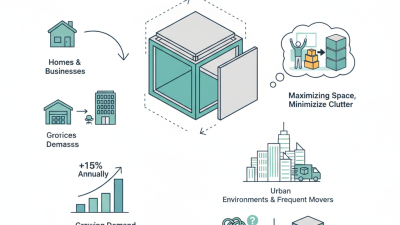
In recent years, the demand for efficient storage solutions has surged in various sectors. Industries require dependable methods to optimize space while ensuring easy accessibility. Flat Pack Containers have emerged as a pivotal solution in this regard. According to a report by Allied Market Research, the global market for flat-pack storage solutions is projected to reach $120 billion by 2026, underlining their growing relevance.
Flat Pack Containers are celebrated for their versatility and efficiency. They reduce transportation costs due to their ability to be assembled and disassembled. Moreover, their design allows businesses to utilize space effectively. A study from Grand View Research indicates that businesses utilizing these containers can increase storage efficiency by up to 30%. This innovation is crucial for companies looking to streamline operations in a competitive landscape.
However, there are challenges within the industry. Quality control can be inconsistent among suppliers, impacting reliability. Not all Flat Pack Containers are created equal, and businesses must be cautious when selecting a supplier. Not only do they need durable products, but also effective customer support. Reflecting on these points, it is clear that while Flat Pack Containers offer numerous benefits, careful consideration is necessary for optimal utilization.
Understanding Flat Pack Containers and Their Benefits
Flat pack containers are revolutionizing storage solutions across various industries. Their design allows for easy assembly and disassembly, which significantly reduces shipping costs. A report from the Global Storage Solutions Alliance indicates that companies can save up to 30% in logistics when using flat pack containers. This economic efficiency is one reason why these containers are gaining popularity.
The benefits of flat pack containers extend beyond just cost savings. They provide flexibility, as they can be easily tailored to fit specific storage needs. For instance, a study by the Storage Optimization Institute found that 75% of businesses reported improved organization after switching to flat pack units. This optimization can greatly enhance work efficiency and product accessibility.
However, the shift to flat pack solutions is not without challenges. Some users find the assembly process confusing, leading to potential frustrations. Additionally, while these containers are durable, improper handling can lead to damage. Businesses need to invest time in training employees on best practices. This aspect is often overlooked but is critical for maximizing the benefits of flat pack containers.
The Evolution of Flat Pack Container Design in China
The design of flat pack containers in China has evolved significantly. Initially, these containers were basic and focused on space efficiency. Today, innovation emphasizes sustainability and ease of use. Manufacturers now utilize lightweight materials, making it easier to transport these containers.
Flat pack containers are not just functional. They come in various designs, catering to diverse storage needs. Some are stackable, which maximizes storage capacity. Others offer modular features, allowing users to customize their storage solutions.
Tip: When selecting a flat pack container, consider its material. Look for durable options that endure wear and tear.
The development of technology also plays a role in this evolution. Advanced manufacturing techniques allow for precise designs. This precision enhances the overall durability of the containers. However, with such rapid advancement,
some designs may overlook user-friendliness. Users may find the assembly process complicated.
Tip: Always read assembly instructions carefully. Practice makes perfect when it comes to putting these containers together.
Flat pack containers provide
efficient storage, but their design must address user experience. As the market grows, manufacturers face challenges in balancing innovation and usability.
Embracing feedback is crucial for future improvements.
Key Features of China’s Top Flat Pack Storage Solutions
When it comes to efficient storage solutions, China's flat pack containers stand out. Their design allows for easy transportation and setup, making them ideal for various applications. These containers can be quickly assembled, saving valuable time and labor costs. Made from high-quality materials, they offer durability and reliability.
Key features include modular designs that adapt to diverse storage needs. Their stackable nature maximizes space, catering to both small and large users. Additionally, many containers come with optional insulation for temperature-sensitive items. However, not all products maintain the same level of insulation.
Another important aspect is the variety of sizes available. This flexibility allows businesses to select containers that fit their inventory perfectly. Still, it’s essential to evaluate the specific needs before choosing. Some containers may not hold up under heavy loads or extreme weather. Understanding these limitations can lead to better decision-making.
Applications of Flat Pack Containers Across Industries
Flat pack containers are revolutionizing storage solutions across various industries. Their lightweight design allows for easy transportation and assembly. Warehouses benefit immensely from these containers. They can be flat-packed to optimize space when not in use, which is critical for keeping operational costs low.
In construction, flat pack containers serve multiple purposes. They provide secure storage for tools and materials on-site, minimizing the risk of theft. These containers are also used as temporary offices or break rooms, enhancing worksite efficiency. Similarly, in the retail sector, businesses use these containers for seasonal inventory. They simplify the process of stock management, which can lead to better sales outcomes.
However, the use of flat pack containers is not without challenges. Assembly can be time-consuming if not performed correctly. Additionally, some might find the lack of built-in shelving restrictive. This prompts companies to innovate further by designing solutions that maximize functionality. As industries continue to evolve, so does the need for adaptable and efficient storage solutions.
Comparative Analysis: Flat Pack vs. Traditional Storage Options
When comparing flat pack containers to traditional storage options, efficiency stands out. Flat pack containers save space when not in use. They can be quickly assembled, providing versatility for various spaces. Traditional storage often requires more room for bulky units. This can lead to inefficient use of space, especially in smaller facilities.
Flat pack solutions are lightweight, making transportation easier. In contrast, traditional storage options may be heavy and cumbersome. They can incur higher shipping costs. However, some users find flat pack containers less durable than traditional ones. This raises concerns about long-term storage needs.
Cost is another factor to consider. Flat pack containers typically offer a lower initial investment. Yet, over time, investing in more robust traditional units might prove worthwhile. Users should evaluate their specific requirements before deciding on storage solutions. Balancing cost with durability is crucial for optimal efficiency.