Why Choose a Flat Pack Container Office for Your Business Needs?
In recent years, the demand for flexible workspaces has surged. Flat Pack Container Offices are increasingly popular among businesses seeking efficiency. According to a report by MarketsandMarkets, the portable office market is projected to reach $55 billion by 2026. This indicates a strong shift towards adaptable work environments.
Renowned industry expert, John Thompson, states, “Flat Pack Container Offices provide excellent solutions for modern businesses.” This reflects the growing recognition of these units for their convenience and cost-effectiveness. These offices are easy to assemble and can be relocated effortlessly, making them suitable for diverse business needs.
However, it's essential to consider potential downsides. While these offices offer flexibility, they may lack some amenities found in traditional office spaces. Businesses must assess their specific requirements. Balancing practicality with comfort is crucial. In conclusion, Flat Pack Container Offices could transform your work environment, but careful evaluation is necessary.
Understanding Flat Pack Container Offices: An Overview
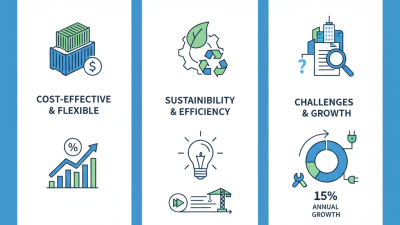
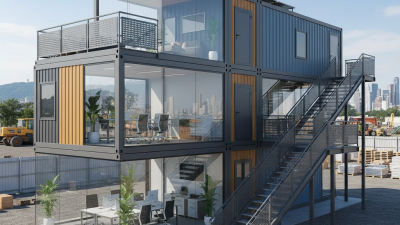
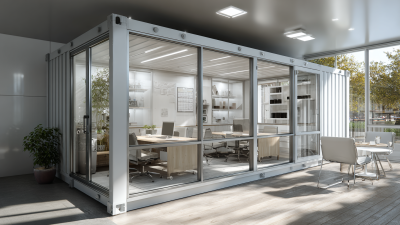
Flat pack container offices have emerged as a practical solution for businesses looking to optimize their workspace. These structures are prefabricated, allowing for easy transportation and quick assembly. According to recent industry reports, the global modular office market is projected to reach $157 billion by 2027, reflecting a growing preference for flexible workspaces.
A particular benefit of flat pack container offices is their eco-friendliness. They utilize recyclable materials, reducing waste production during construction. Furthermore, many designs promote energy efficiency, contributing positively to operational costs. Reports indicate that energy-efficient offices can save businesses up to 30% on utility bills annually.
**Tip:** When considering a flat pack container office, assess your specific needs and local zoning laws. Customizing to your requirements often reveals both cost savings and a more effective layout. However, be mindful of potential challenges, such as site preparation and long-term durability. Take the time to research and reflect on different options available in the market.
Why Choose a Flat Pack Container Office for Your Business Needs?
| Feature |
Description |
Benefits |
| Cost-Effectiveness |
Lower initial investment compared to traditional office buildings. |
Saves money for businesses, allowing for investment in other areas. |
| Quick Assembly |
Designed for rapid setup, often within a few days. |
Minimizes downtime and helps businesses start operations faster. |
| Mobility |
Easily transportable to different locations as business needs change. |
Flexibility to adapt to various project demands and locations. |
| Sustainability |
Often constructed from recycled materials and designed for reusability. |
Reduces environmental impact and aligns with green business practices. |
| Customizability |
Can be tailored to specific business requirements and internal layouts. |
Allows businesses to create optimal workspace environments. |
Key Benefits of Flat Pack Container Offices for Businesses
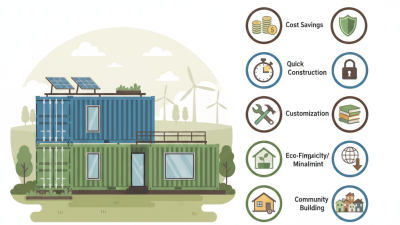
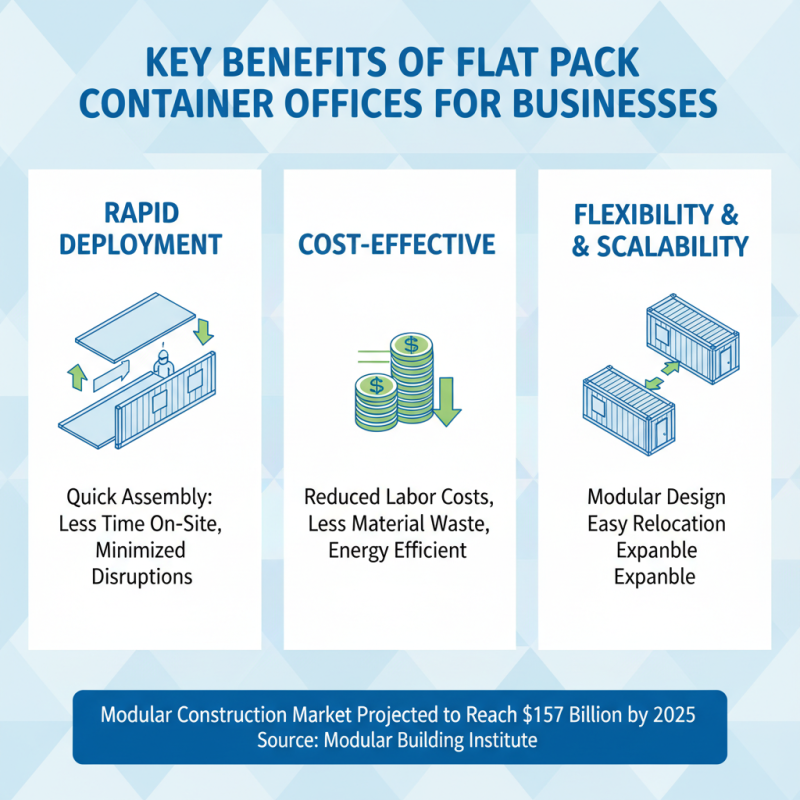
Flat pack container offices are rapidly gaining traction among businesses seeking efficiency and flexibility. According to a report from the Modular Building Institute, the modular construction market is expected to reach $157 billion by 2025. This growth underscores a shift towards innovative workspace solutions. Flat pack offices can be assembled quickly and require less time on-site, allowing businesses to minimize disruptions.
One of the key benefits is cost efficiency. A study by Market Research Future revealed that the use of modular buildings can reduce construction costs by up to 20%. These offices are built in a controlled environment, leading to fewer delays and waste. Many companies have reported reduced expenses and improved budgeting accuracy when opting for flat pack solutions. The speed of assembly can also be a game-changer in sectors where time is of the essence, like healthcare and education.
Flexibility is another crucial factor. A flat pack office can be relocated or expanded with minimal hassle. As business needs evolve, having a workspace that can grow or change with them is vital. However, some may find it challenging to adapt to the aesthetics of a container office. This choice may require a reevaluation of branding and employee comfort. Nonetheless, the potential productivity gains often outweigh these concerns, making flat pack container offices a compelling option for modern businesses.
Cost-Effectiveness and Efficiency of Flat Pack Container Solutions
Flat pack container offices provide a flexible and practical solution for many businesses today. Their cost-effectiveness makes them an attractive option for startups and established companies alike. Compared to traditional office spaces, these containers significantly reduce expenses. They require less time and manpower for assembly. This efficiency translates into lower overhead costs, allowing you to allocate resources to other areas of your business.
When considering flat pack containers, remember a few tips. Ensure that your chosen site has proper access for delivery and installation. If space is tight, measure thoroughly before ordering your container. Think about future growth—select a design that can adapt to your changing needs. These considerations can prevent costly adjustments later on.
Quality is another aspect to watch. While many containers seem affordable, cheap options may lead to hidden expenses. Look for suppliers with a strong reputation for durability. A high-quality flat pack container can last for years, providing better long-term value. Assessing potential weaknesses in your plans can strengthen your decisions.
Flexibility and Customization Options for Container Offices
Flat pack container offices are gaining popularity due to their flexibility and customization options. According to a recent industry report, the modular construction market is projected to grow by 6.5% annually. This growth indicates a shift toward adaptable workspace solutions. Container offices can be tailored to specific needs, allowing businesses to choose sizes, layouts, and features.
Customization is not just about aesthetics; it offers functional benefits too. Companies can integrate sustainable elements, such as energy-efficient windows or solar panels. These modifications can cut operational costs significantly. In fact, a study from the Modular Building Institute stated that modular buildings can be completed 30% faster than traditional constructions. However, it’s essential to consider local zoning laws and regulations, which may impact design feasibility.
Tip: Before selecting a container office, map out your space requirements and future expansions. It’s crucial to leave room for growth. Assessing your current and future needs can save you time and expenses down the line.
Another aspect is the interior design. Customizing the inside of a container office can greatly impact employee satisfaction. A well-planned layout fosters productivity. However, some businesses overlook the importance of good lighting and ventilation. These factors are crucial for maintaining a comfortable workspace. They shouldn't be afterthoughts in the design process.
Benefits of Using Flat Pack Container Offices
Sustainability and Environmental Considerations of Container Offices
Container offices offer a sustainable solution for businesses looking to minimize their environmental impact. These structures are often made from recycled materials, reducing the demand for new resources. The ability to repurpose and reuse shipping containers helps limit waste. Additionally, these offices are durable and require less energy to maintain than traditional buildings.
One key aspect is insulation. Proper insulation can reduce heating and cooling costs. Ensure you're using energy-efficient materials to improve comfort and sustainability. Using solar panels can further enhance energy efficiency.
Choosing a location for your container office can also improve its environmental impact. Placing it near existing infrastructure limits the need for new roads and utilities. This approach not only cuts costs but also reduces the carbon footprint. Consideration of drainage and landscaping is essential too. Improper planning can lead to water runoff issues, necessitating further intervention.
Take time to assess the long-term benefits of a container office. While they can be cost-effective, initial setup requires thoughtful planning. Reflecting on your specific business needs will lead to a better overall solution.