How to Choose a Flat Pack Storage Container?
Choosing a Flat Pack Storage Container starts with the job it needs to do. Will it hold garden tools, seasonal stock, or equipment for a worksite? The answer affects its size, materials, access points, and security features. A container that looks spacious online may feel cramped once shelves, boxes, and a door swing take up room. Measure the site and the items you plan to store.
Details matter. Check the assembled dimensions, packed dimensions, panel material, roof design, and stated load capacity. Ask how many people are needed for assembly and what tools are required. A clear manual and labeled components can save time; vague instructions can turn a simple build into a frustrating afternoon. Also consider drainage, ventilation, and how the unit will be anchored on your surface. These details are easy to overlook. They matter after the first heavy rain or a change in temperature.
A named expert quotation should be verified before publication; none was provided with this brief, so no quotation is invented here. Instead, this guide focuses on practical checks that buyers can confirm with product specifications and the supplier. Compare warranty terms, replacement-part availability, delivery access, and the manufacturer’s assembly guidance. Then weigh those facts against your budget and how often you will need to move or reconfigure the unit. Measure twice. Choose for the real site, not the product photo. A little uncertainty remains until the container is assembled and used, so allow room for that reality when making your choice.
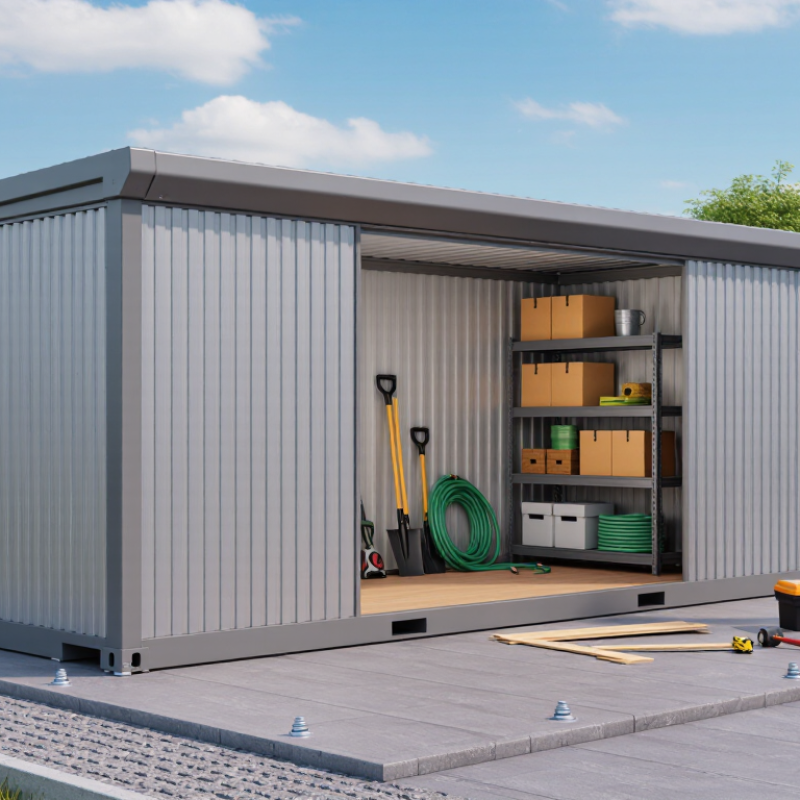
Identify What You Need to Store and How Often You’ll Access It
How to Choose a Flat Pack Storage Container?
Identify What You Need to Store and How Often You’ll Access It
Start with the contents, not the container. List what will go inside, then sort items by how often you need them. A tape measure, spare batteries, or daily-use tools belong near the opening. Seasonal decorations can sit deeper or higher. Heavy items need a sturdy base and an easy-to-reach position; awkwardly shaped items may need a wider opening. Measure the largest object before buying. Guessing can leave you with a container that almost works.
A 2015 survey by the National Association of Productivity & Organizing Professionals reported that 54% of respondents felt overwhelmed by clutter. It was not a container-specific study, but it highlights why deciding what to keep accessible matters. Choose a flat pack container with clear capacity information and a closure suited to your setting. For frequent access, prioritize quick assembly and a lid or door that opens without shifting other boxes. For long-term storage, consider stackability and protection from dust or moisture. I once underestimated the space needed for a coiled hose. It fit, technically. Getting it out was another story.
Tips: Mark the contents and access frequency on two sides. Keep weekly-use items at waist height, and test the assembled container with a light load before stacking it.
Measure the Available Space and Estimate Required Capacity
How to Choose a Flat Pack Storage Container?
Measure the Available Space and Estimate Required Capacity
Start with the installation site, not the container catalogue. Measure the usable length, width, and height, then note doors, overhangs, drains, and the route for delivery. A tape measure can miss sloping ground; check the dimensions at both ends. Leave clearance for assembly and access, too. Measure twice.
ISO 668:2020 gives standard external dimensions for common freight containers: 6.058 metres long for a 20-foot unit and 12.192 metres for a 40-foot unit, both 2.438 metres wide. These are reference points, not guaranteed flat-pack dimensions; wall thickness and fittings reduce usable space. The Self Storage Association’s 2024 Self-Storage Almanac estimates roughly 2.0 billion square feet of rentable storage space in the United States, but market-wide totals cannot predict your personal capacity needs. List what you will store, then estimate its packed volume and allow room for shelves, handles, and items you may add later. Bulky shapes waste space. I still tend to underestimate awkward furniture, so sketching a simple floor plan can expose that mistake before ordering. Leave breathing room.
How to Choose a Flat Pack Storage Container? - Measure the Available Space and Estimate Required Capacity
| Storage location |
Available space (L × W × H) |
Usable space after clearance |
Example container (outer dimensions) |
Estimated capacity per container |
Estimated layout and total capacity |
| Closet shelf |
120 × 45 × 80 cm |
110 × 35 × 70 cm |
50 × 30 × 30 cm |
About 34 L (internal: 47 × 27 × 27 cm) |
4 containers; about 137 L total |
| Under a bed |
180 × 80 × 25 cm |
170 × 70 × 20 cm |
80 × 35 × 18 cm |
About 37 L (internal: 77 × 32 × 15 cm) |
4 containers; about 148 L total |
| Utility-room alcove |
100 × 65 × 120 cm |
90 × 55 × 110 cm |
45 × 35 × 32 cm |
About 42 L (internal: 42 × 32 × 31 cm) |
2 containers; about 84 L total |
| Garage storage area |
240 × 120 × 210 cm |
230 × 110 × 200 cm |
75 × 55 × 45 cm |
About 157 L (internal: 72 × 52 × 42 cm) |
Up to 24 containers in a 3 × 2 × 4 layout; about 3,773 L total |
Planning note: Measurements are examples in centimetres. Leave clearance for handles, lids, uneven walls, and easy access. Capacity estimates use the stated internal dimensions and are approximate; check the container’s assembled dimensions and maximum stacking guidance before purchasing.
Compare Container Materials, Designs, and Weather Resistance
Choosing a flat pack storage container starts with its intended location and load. Steel panels can provide strong support, but they need a protective finish to resist rust, especially near damp ground. Plastic panels are lighter and easy to wipe clean, though they may flex under heavy loads or become brittle after long exposure to sunlight. Check the stated load capacity and inspect panel edges before buying.
Design affects both assembly and daily use. Look for clear instructions, labeled parts, and fasteners that can be tightened with common tools. A wide door makes bulky items easier to move, while ventilation openings can reduce trapped moisture. But gaps around doors may also let in wind-driven rain. Small details matter. A raised floor or fitted base can help keep stored items away from puddles.
Weather resistance depends on more than the material. Check whether the roof slopes to shed water, and whether seams have seals or protective overlaps. In exposed areas, secure the container as directed and avoid placing it where water collects. A coating can chip; seals can wear. I would recheck both after the first wet season, since assembly quality and local weather can change how well a container performs. No design is completely maintenance-free, and that is easy to underestimate.
Check Assembly Requirements, Portability, and Security Features
Before choosing a flat pack storage container, check how it goes together. Look for clear instructions, labeled panels, and a parts list that names every bolt and bracket. A stated assembly time is only an estimate; uneven ground or a missing tool can slow the job. Small details matter. Check whether two people are recommended, especially for lifting wide wall panels. Confirm which tools you need, and leave enough room to lay parts flat. I still tend to underestimate that space. A container that seems simple on paper can feel awkward in a narrow driveway.
Portability depends on more than the flat-pack design. Compare the packed dimensions and weight with your vehicle, storage area, and planned route. Once assembled, check whether the unit can be moved safely when empty, and whether it needs anchoring. For security, inspect the door frame, hinge design, and lock points. A sturdy hasp is useful, but it cannot compensate for a flimsy door or poorly fitted panels. Ask whether a padlock is included or must be purchased separately. Also consider visibility: a container tucked behind a fence may be less noticeable, but it should still be easy to inspect. No lock makes a lightweight unit theft-proof, so match its security features to the items and location.
Evaluate Total Cost, Warranty, and Supplier Support
When comparing flat pack storage containers, price the delivered, usable unit, not the kit alone. Include freight, unloading equipment, foundation preparation, assembly labor, fasteners, corrosion protection, and replacement parts. CSCMP’s 2024 State of Logistics Report put U.S. business logistics costs at $2.3 trillion, or 8.7% of GDP, in 2023. This is not a container quote, but it shows why transport and handling need their own line. A low unit price can fade fast. Check dimensions too: a door that misses a pallet jack by a few centimeters can cost time every day.
Read the warranty as an operating document. Confirm its term, exclusions, surface-preparation rules, claim evidence, labor coverage, freight costs, and replacement-panel process. Ask for written response and parts-shipping targets, plus a named technical contact. A warranty without reachable support offers weak protection. UNCTAD’s Review of Maritime Transport 2024 says seaborne trade carries over 80% of world merchandise trade by volume. International sourcing can therefore add transit uncertainty and damage-claim delays. Ask how the supplier packs corner posts, seals hardware, and documents dispatch. Request two comparable references, not polished testimonials. I would still leave room for doubt: support quality is hard to judge before a failure. Test it with one specific question, then note how quickly and clearly the supplier responds.