2026 Best Flat Pack Containers for Global Procurement Needs?
In today's global market, reliable solutions are essential for procurement needs. Flat Pack Containers offer a unique approach to logistics efficiency. These containers are versatile and simplify transportation challenges. Their design allows easy assembly and disassembly, reducing shipping costs.
Choosing the right Flat Pack Containers can be daunting. Factors like material, size, and durability matter greatly. Many businesses overlook the importance of these details. However, the right choice can enhance supply chain effectiveness. Consider the environmental impact, as well. Sustainable materials are becoming increasingly preferred.
As 2026 approaches, the demand for innovative Flat Pack Containers grows. Procurement professionals must stay informed about emerging trends. Balancing cost and functionality is crucial. Sometimes, the most economical option may not meet all requirements. Thoughtful selection will lead to stronger business outcomes and better sustainability practices.
Overview of Flat Pack Containers in Global Procurement
Flat pack containers have become essential in global procurement. Their design allows for efficient shipping and storage. These containers are easy to assemble and disassemble, making them ideal for international trade.
In recent years, many companies have recognized the benefits of flat pack containers. They reduce shipping costs significantly. Moreover, they minimize the carbon footprint during transportation. However, some challenges persist. Not all flat pack designs are compatible with every product type. This can lead to inefficiencies if not managed properly.
Understanding the right materials is also crucial. Certain products require specific types of packaging to ensure safety and quality. Businesses must consider these factors when choosing flat pack solutions. The goal is to ensure that products arrive intact and ready for use. Without careful selection, procurement efforts may fall short.
Key Features and Benefits of Flat Pack Containers
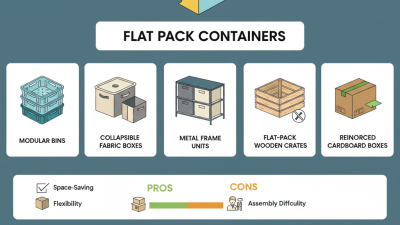
Flat pack containers have gained popularity in global procurement. Their design allows for efficient storage and shipping, making them ideal for various industries. One key feature is their space-saving capability. When disassembled, these containers can reduce shipping volume considerably. This is especially crucial in logistics, where space and weight directly impact cost.
Another benefit is versatility. Flat pack containers can be employed in diverse applications, from housing to warehousing. Their sturdy construction ensures that goods are well-protected during transit. However, not all flat pack designs are created equal. Some may lack durability or ease of assembly. It’s essential to assess their specifications closely.
Sustainability is also a vital consideration. Many flat pack containers are made from recyclable materials, promoting eco-friendly practices. Yet, the environmental impact of production can vary widely. It's important to reflect on the overall lifecycle of these products. Purchasing decisions should not only focus on initial costs but also on long-term sustainability. This dual approach can lead to more responsible and thoughtful procurement choices.
2026 Best Flat Pack Containers for Global Procurement Needs
| Container Type |
Material |
Load Capacity (kg) |
Dimensions (cm) |
Assembly Type |
Key Features |
Benefits |
| Standard Flat Pack |
Wood |
1000 |
120 x 80 x 60 |
Bolt Together |
Eco-friendly, Durable |
Cost-effective, Lightweight |
| Stackable Container |
Plastic |
800 |
100 x 50 x 50 |
Snap Fit |
Lightweight, Rainproof |
Space-saving, Easy to Handle |
| Heavy Duty Container |
Metal |
1500 |
130 x 100 x 80 |
Welded |
Secure Lock, Fireproof |
High Security, Long-lasting |
| Foldable Container |
Plastic |
600 |
80 x 60 x 40 |
Foldable |
Space-efficient, Reusable |
Convenient, Cost-saving |
Top Manufacturers and Brands in the Flat Pack Container Market
The flat pack container market is evolving rapidly. In 2023, it was valued at approximately $3 billion. Analysts predict it will reach $5 billion by 2026. This growth represents an annual increase of around 10%. This booming market indicates increasing global demand among various sectors.
Major players in this industry include manufacturers specializing in eco-friendly materials. These brands are innovating to meet sustainability goals. In recent surveys, 70% of companies prefer suppliers who prioritize green practices. However, challenges remain. Many manufacturers struggle with supply chain disruptions. This affects their ability to meet rising demand. Adopting advanced technologies could offer solutions, yet investment remains a concern.
Quality control is vital in the flat pack container market. A significant percentage of containers fail quality tests annually. This raises questions about manufacturing standards. Companies need to prioritize rigorous testing protocols. Reliable sourcing and production practices enhance trust. Ultimately, focusing on resilience and innovation will be essential for success in this dynamic arena.
2026 Global Procurement Needs: Flat Pack Container Market Overview
Sustainability and Environmental Impact of Flat Pack Packaging
Flat pack packaging has gained traction as a sustainable solution, addressing global procurement needs. Recent reports indicate that flat pack containers can reduce shipping costs by up to 30%. This is vital for businesses looking to minimize their carbon footprint. However, the environmental impact is not solely financial.
In 2020, packaging waste accounted for nearly 30% of global waste. Flat pack solutions help mitigate this issue by requiring less material and promoting recyclability. According to a study from the Ellen MacArthur Foundation, shifting to circular packaging systems could generate $4.5 trillion in economic benefits by 2030. Yet, challenges remain. Many flat pack materials are still non-biodegradable, leading to long-term waste concerns.
Consumer awareness plays a pivotal role in this transition. A survey by McKinsey found that 60% of consumers prioritize sustainability when choosing products. Still, many companies lag in implementing these eco-friendly practices. Businesses must continuously reflect on their packaging strategies to meet evolving consumer demands while minimizing ecological harm. The path to sustainability is complex but necessary.
Trends and Innovations Shaping the Future of Flat Pack Containers
Flat pack containers are evolving rapidly. Their innovative designs and materials are reshaping how businesses approach global procurement. These containers prioritize efficiency and sustainability. Lightweight materials reduce shipping costs, while modular designs facilitate flexible storage solutions. This trend caters to diverse industries, from e-commerce to manufacturing.
Tips: When choosing flat pack containers, consider your specific needs. Assess weight capacity and durability. Understand your supplier's sustainability practices. Loyal partnerships can provide insights into emerging trends.
New technologies are influencing flat pack container trends. Digital tracking systems enhance logistics efficiency. Meanwhile, eco-friendly materials like biodegradable plastics are improving sustainability. However, not all innovations are perfect. Companies might struggle with adapting to rapid changes. It's essential to stay updated without overwhelming staff with constant shifts.
Tips: Engage your team in discussions about new practices. Providing training can alleviate concerns around new technologies. Assess how changes impact workflow efficiency regularly.