2026 Top Trends in Flat Pack Container Office Solutions?
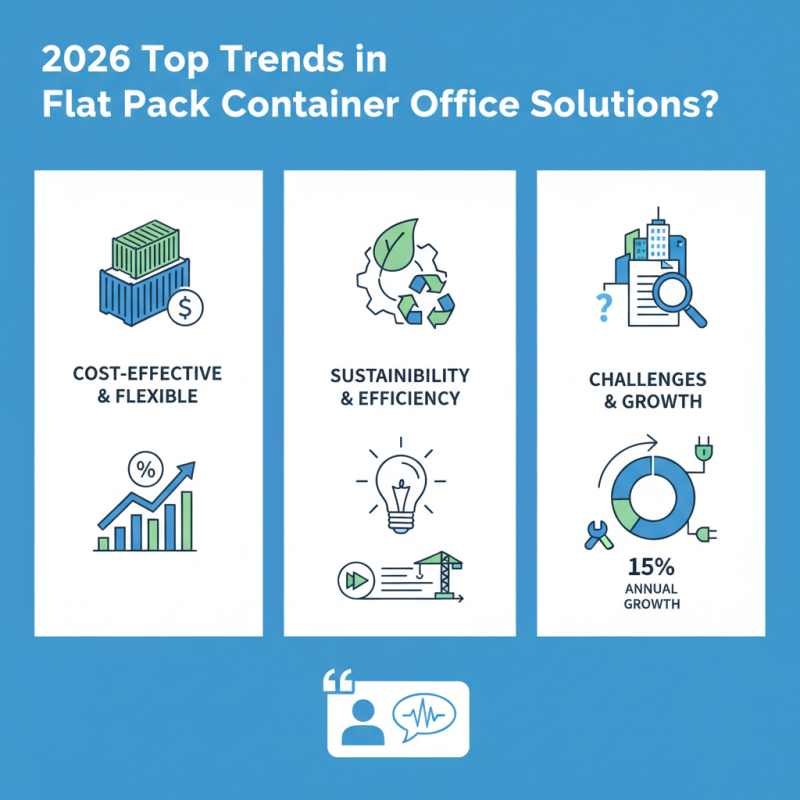
The rise of the Flat Pack Container Office solutions is transforming the way businesses utilize space. As companies seek cost-effective, flexible work environments, these units have gained significant traction. Industry expert John Taylor emphasizes, "The efficiency of Flat Pack Container Offices is redefining workspace adaptability."
Recent reports indicate that the global market for flat pack solutions is projected to grow by 15% annually, driven by urbanization and evolving workforce needs. These modular offices can be deployed rapidly, reducing downtime during relocation or expansion. They also minimize construction waste, aligning with sustainability goals in today’s corporate landscape.
However, challenges remain in design optimization and regulatory compliance. Companies may struggle to navigate local zoning laws. Additionally, some may overlook the potential for enhancements in energy efficiency. As the demand grows, it is crucial for stakeholders to address these gaps. Overall, the future of Flat Pack Container Offices looks promising, but thoughtful consideration will determine their lasting impact.
2026 Projected Growth Rate of Flat Pack Container Office Solutions Market
The flat pack container office solutions market is projected to see significant growth over the next few years. According to the latest industry report, the market is expected to expand at a compound annual growth rate (CAGR) of around 8.5% from 2023 to 2026. This growth is fueled by the increasing demand for flexible workspaces and the need for quick, cost-effective construction methods.
One of the driving factors is the rising trend of remote work. Companies are searching for ways to create additional workspace without extensive renovations. Flat pack containers offer an appealing solution. They can be deployed quickly and require less labor than traditional building methods. Reports indicate that more than 70% of businesses are considering such solutions for temporary offices and on-site projects. However, challenges remain. Not all locations are suitable for containerized offices, and there are concerns around insulation and climate adaptability.
As the market evolves, manufacturers must address these issues. Innovations in material technology promise improved durability and comfort. Still, the perception that container offices may appear unattractive persists. Overcoming these aesthetic concerns is vital for widespread adoption. The industry must also assess environmental impacts. While these solutions can be more sustainable, proper recycling protocols for the containers should be prioritized. Exploring these dimensions will shape the future of flat pack container offices.
Key Features Driving Adoption of Flat Pack Container Offices in 2026
Flat pack container offices are gaining attention in 2026. Their growing popularity is driven by several key features.
Flexibility is one major advantage. These offices can be quickly deployed in various locations. This is ideal for businesses with changing needs.
Low costs are also attractive. They reduce expenses compared to traditional construction methods.
Sustainability is another significant factor. Many designs use eco-friendly materials. This responds to consumer demand for green solutions.
Modular designs allow for easy expansion. Businesses can adapt spaces without major renovations. However, challenges exist.
Not all container offices meet local regulations. It's crucial to check building codes in your area.
Tips for maximizing usage include customizing interiors. Personalizing spaces can enhance employee satisfaction.
Consider the layout carefully. Open spaces promote collaboration, while private areas support focused work.
Evaluate insulation needs too. Proper climate control is essential for comfort. Overall, while flat pack container offices offer many advantages, there are still factors to consider before adopting this solution.
Sustainability Trends Influencing Flat Pack Container Office Designs
Sustainability is redefining flat pack container office designs. Eco-friendly materials are now a priority. Companies are seeking options that reduce their carbon footprint. Recycled steel and bamboo are popular choices. These materials not only lower environmental impact, but they also offer durability.
Water conservation features are critical as well. Rainwater harvesting systems are becoming standard. These systems help in reducing water waste. However, the challenge still lies in making these systems efficient for all climates. Solar panels are also gaining traction, providing renewable energy. Yet, some designs face issues with energy efficiency.
Mobility and adaptability are key trends. Businesses want offices that can easily relocate. Flat pack solutions fit this need, allowing quick setup. Yet, logistics can sometimes complicate transportation. Both design flexibility and functionality are crucial. Striking this balance is an ongoing challenge for many architects.
2026 Top Trends in Flat Pack Container Office Solutions
This chart represents the importance of various trends influencing the design of flat pack container offices in 2026. Sustainability emerges as the top priority, followed by flexibility and cost-efficiency, highlighting the key areas of focus for modern workspace innovation.
Technological Innovations Enhancing Flat Pack Container Office Functions
The demand for flat pack container offices is growing rapidly. This evolution is partly due to technological innovations that enhance their functionality. Recent industry reports indicate that the global modular office market will reach $157 billion by 2026. With such projections, these compact solutions are clearly becoming essential for businesses everywhere.
Technologies like smart building systems are now being integrated into container offices. These systems enhance energy efficiency and automate key functions. For instance, IoT-enabled devices can monitor occupancy levels and adjust energy usage accordingly. Despite these advancements, some installations may face challenges with connectivity or rugged environments. Such issues prompt reflection on how to improve designs.
Mobile and flexible workspace options resonate with modern work trends. According to a study by a leading research firm, 84% of employees prefer remote or hybrid work. This shift pushes companies to rethink their office spaces. However, creating productive environments within these containers can still be tricky. Noise control and ventilation are common concerns. Finding solutions is necessary to truly harness the potential of flat pack containers in 2026 and beyond.
2026 Top Trends in Flat Pack Container Office Solutions
| Trend |
Description |
Technological Innovations |
Expected Impact |
| Telecommuting Integration |
Designs that support remote work setups effectively. |
Smart connectivity features, ergonomic furniture. |
Increases employee productivity and satisfaction. |
| Sustainability Focus |
Use of eco-friendly materials in construction. |
Solar panels, recycled materials. |
Reduces carbon footprint and promotes environmental awareness. |
| Modular Design |
Flexible designs that can be expanded or reduced. |
Interlocking systems, customizable layouts. |
Eases adaptation to changing business needs. |
| Smart Workspace Solutions |
Incorporation of IoT technologies for enhanced functionality. |
Automated lighting, temperature control systems. |
Improves energy efficiency and user comfort. |
| Enhanced Privacy Features |
Acoustic treatments and private spaces for calls. |
Soundproof panels, private booths. |
Promotes confidentiality and reduces distractions. |
Regulatory Changes Impacting the Deployment of Container Offices in 2026
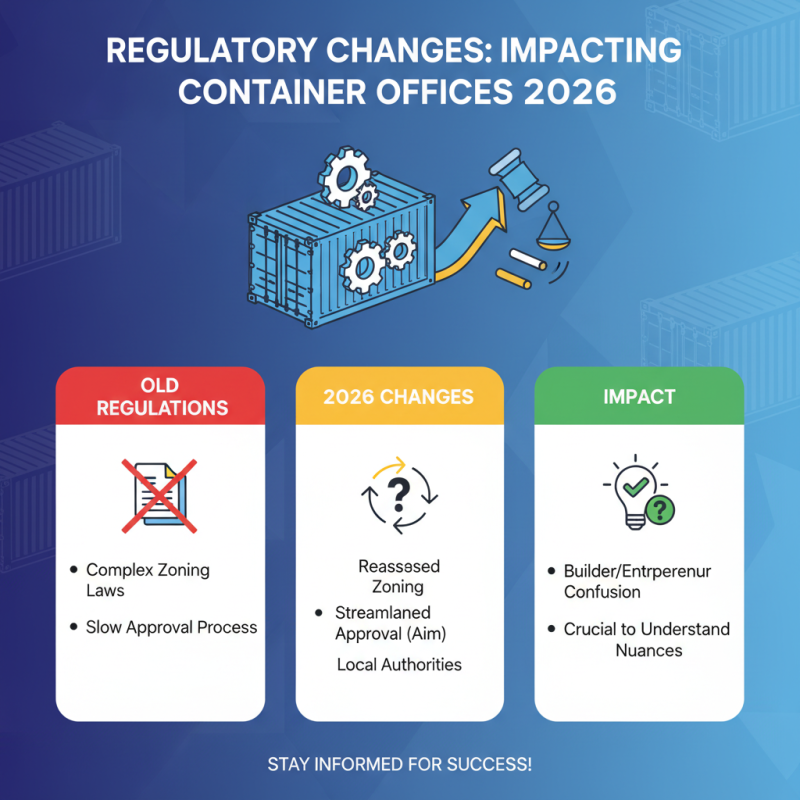
In 2026, the deployment of container offices will be heavily influenced by regulatory changes. Local authorities are reassessing zoning laws to accommodate these innovative structures. This shift aims to streamline the approval process but may create confusion among builders and entrepreneurs. Understanding the nuances of these regulations will be crucial for success.
The impact of environmental regulations cannot be ignored. New mandates focused on sustainability will likely push container office developers towards cleaner construction practices. Yet, some may struggle to adapt. For instance, incorporating eco-friendly materials can increase costs. Balancing budget constraints with compliance will require careful planning.
Additionally, safety codes are evolving. Fire safety regulations may become more stringent, affecting design choices. Developers may find themselves navigating complex codes. This could lead to delays in project timelines. Industry players must remain vigilant and adaptable. Anticipating these changes will be key to thriving in the competitive landscape of container office solutions.