Why Choose Barrack Building for Global Buyers?
For global buyers, Barrack Building offers a practical approach to fast, adaptable, and cost-conscious construction. Its systems can support worker accommodation, site offices, classrooms, storage areas, and emergency facilities. Buyers may value modular components, predictable production, and simpler transportation planning. A well-designed barrack building can arrive as panels, frames, doors, windows, and service fittings. These parts can then be assembled around the project’s actual conditions. That flexibility matters when land, labor, and weather vary across regions.
Reliable purchasing requires more than an attractive quotation. Experienced buyers should review material certificates, structural calculations, fire-safety provisions, insulation performance, and installation instructions. Local building codes may differ significantly. Barrack Building suppliers should therefore provide clear technical documents and cooperate with qualified local professionals. This helps reduce misunderstandings during approval and construction. It also supports safer decisions for workers and facility users.
Details matter.
A dependable supplier should explain lead times, packaging methods, warranty coverage, replacement parts, and after-sales support. A sample wall section can reveal more than polished photographs. Buyers should inspect joints, roof drainage, floor strength, and ventilation before placing a large order. No supplier gets every detail right. Even a strong design may need adjustment for coastal humidity, extreme cold, or limited site access. That honest limitation is useful, not embarrassing. By comparing verified specifications with real project needs, global buyers can choose Barrack Building with greater confidence, clearer expectations, and a more reliable construction outcome.
What Is Barrack Building and Who Uses It?
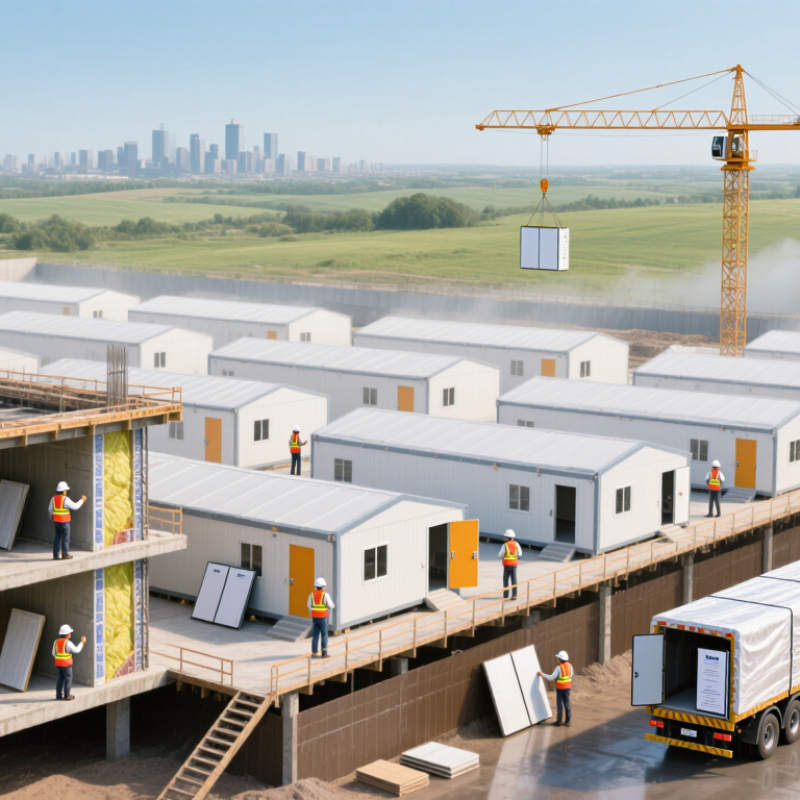
Barrack building usually means a prefabricated, modular structure designed for efficient accommodation. Its sections are manufactured in controlled workshops, then transported and assembled on site. A typical unit may include sleeping rooms, washrooms, kitchens, lighting, insulation, and basic electrical systems.
Who uses it? Construction companies often need practical housing near large projects. Mining and energy teams may require accommodation in remote regions. Schools, clinics, relief organizations, and event operators also use these buildings when permanent facilities are unavailable. Some units serve as offices, classrooms, dining halls, or medical rooms. The layout can be changed. That matters when workforce numbers shift.
Global buyers should examine more than the purchase price. Local building codes, fire protection, ventilation, snow loads, wind resistance, and accessibility requirements can differ greatly. A unit suitable for a dry climate may perform poorly in heavy rain or freezing temperatures. Ask for material specifications, structural calculations, inspection records, and clear installation instructions. Check how doors, windows, wiring, and plumbing will be adapted to local standards.
In practical planning, delivery routes deserve attention. A narrow road or weak bridge can delay a project before assembly begins. Site drainage matters too. Water near the foundation creates expensive problems. Barrack buildings can be fast and economical, but “temporary” does not mean maintenance-free. Some buyers focus heavily on speed and overlook long-term comfort. That choice may need reconsideration.
How Barrack Buildings Meet Global Accommodation Needs
Barrack buildings support practical accommodation needs across many regions. Their modular layouts can house workers, students, emergency teams, or temporary project staff. Rooms, washrooms, kitchens, offices, and storage areas can be arranged for different uses. This flexibility helps buyers respond to changing occupancy levels without rebuilding the entire site.
Reliable accommodation depends on more than low purchase cost. Local climate, transport access, drainage, ventilation, and fire safety require careful review. Insulation may be essential in cold areas, while shaded openings and airflow matter in hot climates. Materials should suit local maintenance skills and replacement availability. Accessibility also deserves attention, especially near entrances and shared facilities. In real projects, small planning errors can cause uncomfortable rooms or expensive changes. No layout is perfect. A thoughtful assessment reduces these risks.
Tips: Confirm local building requirements before ordering. Check wind, rain, humidity, and temperature conditions. Request clear drawings for electrical, plumbing, and ventilation systems. Allow space for maintenance access and future expansion. Visit a completed installation when possible. Photos can hide practical weaknesses. Speak with users, not only suppliers. Their daily experience often reveals problems that technical documents miss. A reliable barrack building should feel safe, clean, adaptable, and simple to manage.
Why Choose Barrack Buildings for Global Buyers?
Global forced displacement indicates the growing need for fast, scalable accommodation solutions.
According to UNHCR Global Trends reports, the number of forcibly displaced people worldwide increased from approximately 82.4 million in 2020 to 123.2 million in 2024. Barrack buildings can support this demand by providing rapidly deployable, adaptable spaces for temporary housing, worker accommodation, emergency response, education, and healthcare facilities.
Source: UNHCR Global Trends Reports, 2020–2024. Figures represent people forcibly displaced worldwide at year-end.
Key Design Features of Modern Barrack Buildings
Why Choose Barrack Building for Global Buyers?
Key Design Features of Modern Barrack Buildings
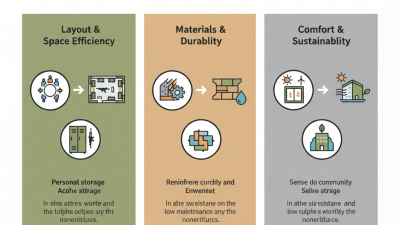
Modern barrack buildings are no longer simple rows of rooms. Global buyers now expect flexible layouts, durable materials, and healthier indoor spaces. Modular steel frames support faster assembly and easier future expansion. Insulated wall panels reduce heat transfer, while shaded windows limit glare in hot climates. Cross-ventilation also matters. It can improve comfort without relying entirely on mechanical cooling.
The International Energy Agency reports that buildings consume about 30% of global final energy. Its Buildings report also links buildings to roughly 26% of energy-related emissions. These figures make efficient design a practical buying concern. LED lighting, occupancy sensors, low-flow fixtures, and rooftop solar readiness can reduce operational pressure. Designers should also plan clear corridors, accessible entrances, fire-resistant compartments, and separated wet areas. The details matter. A poorly placed drain can disrupt an entire living block.
Tips:
Check the local climate before selecting insulation thickness. Request tested fire, acoustic, and structural performance data. Review maintenance access around air-conditioning units and plumbing lines. A smart layout should support beds, lockers, charging points, and personal storage without narrowing walkways. Do not overdesign every room. Excessive standardization can make occupants feel uncomfortable, and that weakness is often missed during early planning. The best specification balances repeatable construction with human-scale details. (Sources: International Energy Agency, Buildings 2023; UNEP, Global Status Report for Buildings and Construction 2023.)
Why Barrack Buildings Offer Cost and Time Advantages
Why Choose Barrack Building for Global Buyers?
Barrack buildings can shorten the path from purchase order to occupied rooms. Factory production runs while foundations are prepared on site. This parallel workflow reduces idle labor and weather-related delays.
McKinsey’s 2019 report, Modular Construction: From Projects to Products, found that modular methods can cut schedules by 20–50%. It also reported potential cost reductions of up to 20%. Those figures are not promises. They are useful planning benchmarks.
Cost control becomes visible through repeatable components. Wall panels, doors, wiring, and plumbing can follow approved specifications. Workers perform many tasks under controlled factory conditions. This can reduce material waste and rework.
A 2019 SmartMarket report on prefabrication found that contractors increasingly valued prefabrication for better schedule predictability and quality control. For global buyers, standardized modules also simplify quantity checks. Fewer surprises help protect shipping budgets. Sometimes, the cheapest unit creates the highest total cost.
Transport still requires careful judgment.
A remote site may face port charges, customs procedures, road limits, or crane shortages. Buyers should request a landed-cost schedule, not only a factory quotation. They should also inspect samples, verify fire and structural documentation, and confirm local code compatibility.
The World Bank’s logistics research repeatedly links unreliable transport with higher delivery uncertainty. That weakness can erase factory savings. Barrack buildings work best when design, packing, shipping, and installation are planned together.
Small errors matter.
What Global Buyers Should Consider Before Purchasing
Why Choose Barrack Building for Global Buyers?
What Global Buyers Should Consider Before Purchasing
Barrack buildings can provide practical accommodation, offices, clinics, or site facilities. However, an attractive quotation is only the beginning. Global buyers should check structural design, fire resistance, insulation, ventilation, and accessibility before signing. Local conditions matter. A building designed for mild weather may fail under heavy snow, strong winds, seismic movement, or coastal corrosion.
Energy performance also deserves careful attention. The International Energy Agency’s Buildings 2023 report states that building operations represent about 30% of global final energy consumption. The 2023 Global Status Report for Buildings and Construction reports that buildings create approximately 37% of global energy and process-related carbon emissions. Better insulation, efficient lighting, and durable materials can reduce long-term expenses. They may also improve indoor comfort.
Transport and installation can change the real cost. Buyers should request packing dimensions, loading plans, foundation requirements, assembly tolerances, and spare-part availability. Customs documents must match the shipment exactly. Ask for factory inspection records and product test certificates. Local approval remains essential, even when a supplier provides international documentation. Standards are not interchangeable everywhere.
A low price can still be a poor decision. I would challenge my own assumptions. Some lifecycle costs are easy to miss, especially drainage, maintenance, replacement panels, and electrical adaptation. Experienced buyers compare total ownership costs, not only the purchase invoice. No checklist is perfect. Independent inspection before shipment can reveal small defects before they become expensive site problems.