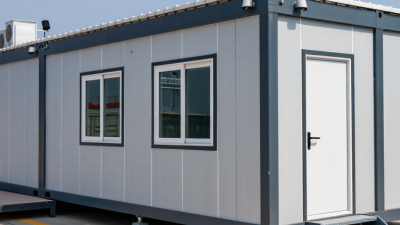
Buying a Portable Carbin across borders requires more than comparing photographs and headline prices. Buyers must examine structure, insulation, transport dimensions, installation requirements, and after-sales support. A cabin that looks inexpensive may need expensive foundations, crane access, or electrical upgrades at its destination.
Industry evidence supports careful evaluation. McKinsey & Company’s 2019 report, Modular construction: From projects to products, found that modular methods can reduce construction schedules by up to 50% and costs by up to 20% in suitable projects. These are potential gains, not guarantees. The Modular Building Institute’s annual industry reports also show sustained demand for factory-built spaces in education, healthcare, housing, and commercial applications. Conditions vary widely between regions.
“The current business model is broken,” states Mark Farmer, author of Modernise or Die and a recognised construction-industry adviser. His warning is relevant to Portable Carbin buyers because supplier reliability matters as much as product design. A strong factory should provide material specifications, factory quality records, wind and snow-load data, installation drawings, and clear warranty terms. Ask for recent customer references.
Check every detail.
This guide presents ten practical buying tips for global buyers. It considers climate exposure, certification, shipping protection, customs documentation, delivery access, interior finishes, energy performance, maintenance, payment security, and future relocation. Buyers should also question optimistic delivery promises. A cheaper unit may become a poor investment when spare parts are unavailable or local technicians cannot service it. No checklist is perfect, but a documented, evidence-based decision is safer than choosing from attractive images alone.

10 Portable Cabin Buying Tips for Global Buyers?
Define use and capacity before comparing portable cabins. ISO 668 identifies standard Series 1 container modules, including 20-foot and 40-foot lengths. A standard 20-foot unit measures about 6.058 metres long and 2.438 metres wide externally. A 40-foot unit measures about 12.192 metres long with the same width. Both are commonly 2.591 metres high. These are transport dimensions, not living space. Wall insulation, flooring, wiring, and ventilation reduce the interior area.
A 20-foot cabin suits a compact office, guard room, or one-room site facility. A 40-foot module offers more planning freedom for storage, workstations, or separate rooms. It is not simply twice as useful. Access routes, lifting equipment, foundation limits, and delivery costs can change the decision. UNCTAD’s Review of Maritime Transport 2024 reports that maritime transport carries over 80% of global merchandise trade by volume, supporting the continuing relevance of container-based logistics. Yet transportability does not guarantee local usability.
Ask for a dimensional drawing, tare weight, payload rating, door clearances, and certified lifting points. Check whether the quoted dimensions describe the external shell or usable interior. Climate also matters: a humid coastal site needs stronger moisture control, while a cold region requires tested insulation and heating capacity. I have seen buyers focus on floor area and overlook electrical loading. That mistake can become expensive. ISO 668 helps standardize the module, but it does not define comfort, fire performance, accessibility, or every local installation requirement. Get those details verified by a qualified surveyor.

A portable cabin must be checked as a structure, not treated as a simple movable box. EN 1991-1-4 defines wind actions, while EN 1991-1-3 addresses snow loads. These standards require site-specific inputs, including terrain category, building height, exposure, and roof shape. A cabin beside an open field may face stronger wind pressure than one sheltered by nearby buildings.
Check the National Annex for the destination country. It may set different wind speeds, snow zones, importance factors, and combination rules. The European Commission’s Joint Research Centre identifies these national parameters as essential for consistent Eurocode design. EN 1998-1 also requires seismic evaluation where earthquake actions apply. Connections matter most. Inspect anchor bolts, corner joints, roof-to-wall fixings, and the foundation interface. Small failures often begin there.
Climate data deserves attention, but it cannot replace the code. The World Meteorological Organization reported that 2023 was approximately 1.45°C above the 1850–1900 average. That figure signals changing conditions, yet it does not justify inventing a new design load. Ask for signed calculations, load combinations, material grades, and test evidence. Request drawings showing how the cabin resists uplift and sliding. Do not accept “strong enough” as proof. I have seen attractive cabins with weak anchorage details. Sometimes the missing document reveals the real risk.
Portable cabin buyers should compare insulation and fire performance as separate technical questions. ISO 6946 helps assess thermal resistance through walls, roofs, floors, and layered construction. Ask for the calculated U-value, not only the insulation thickness. A thick panel can still perform poorly when joints, metal framing, or wet materials create thermal bridges. Check the declared conductivity, layer order, design temperature, and installation assumptions.
Tip: Request drawings and test evidence for the complete wall or roof assembly. EN 13501-1 classifies reaction to fire, including ignitability, flame spread, smoke, and flaming droplets. A product rating is not automatically the rating of the finished cabin. Sealants, internal linings, insulation cores, and service penetrations may change performance. Look for the exact classification, such as A2-s1,d0, and confirm its scope. Local authorities may require additional fire resistance for doors, compartments, or structural elements.
Tip: Compare like with like. ISO 6946 calculations and EN 13501-1 test classifications serve different purposes. Do not accept a sales sheet as independent proof. Request dated laboratory reports, installation limits, and maintenance conditions. In practice, transport damage can expose insulation edges and weaken airtightness. I have seen specifications overlook this small detail. It matters. Also inspect condensation risks, because moisture can reduce insulation performance over time. If the documents are unclear, pause the purchase and ask a qualified building professional to review the complete specification.
Use the chart to compare the calculated thermal resistance of a 100 mm insulation layer. Under ISO 6946, the basic insulation resistance is calculated as R = thickness ÷ thermal conductivity. Higher R-values generally indicate better insulation performance, while the complete wall U-value must also include the other layers, thermal bridges, surface resistances, moisture conditions and workmanship.
Request the full wall build-up and calculated U-value, not only the insulation thickness. Confirm the declared thermal conductivity and the design conditions used for the calculation.
Fire classes such as A1, A2-s1,d0, B-s1,d0 and E describe the reaction-to-fire performance of a specific tested product or assembly. Always request a valid classification report for the exact wall, ceiling and lining system.
Illustrative material comparison using representative thermal-conductivity values commonly used for preliminary design. Actual declared values, fire classifications and regulatory requirements vary by product, density, facing, installation and jurisdiction.
Confirm Transport Compliance with CSC Container Safety Requirements
When buying a portable cabin for international transport, check its CSC compliance before discussing paint, windows, or interior fittings. The CSC Convention sets safety requirements for containers moved by sea and other transport systems. A valid CSC safety approval plate should show the container’s identification, maximum gross mass, and inspection details. Examine the plate carefully. It should be fixed securely and match the transport documents.
Tips: Ask for recent inspection records, structural drawings, and modification details. Check the corner castings, lifting points, doors, floor, and roof for distortion or corrosion. A cabin may look new but still fail a lifting inspection. Confirm the carrier and destination port will accept its dimensions, weight, and CSC status. Requirements can vary by route, so written confirmation is valuable.
Conversions deserve extra attention. Cutting openings, adding heavy equipment, or changing the frame can affect load paths and corner-post strength. Request an assessment from a qualified container inspector after major modifications. Do not rely on a seller’s statement alone. The CSC plate supports transport safety; it does not automatically approve the cabin as a permanent building. I have seen buyers focus on delivery speed and discover missing records later. That delay is avoidable. Keep photographs, certificates, serial numbers, and inspection dates together before payment and shipment.
A practical, specification-based checklist for evaluating portable cabins intended for road, rail, sea or multimodal transport.
| No. | Buying Dimension | What to Verify | Reliable Data or Benchmark | Why It Matters | Recommended Buyer Action |
|---|---|---|---|---|---|
| 1 | CSC Applicability | Determine whether the cabin will be transported internationally as a freight container or as cargo loaded onto another transport unit. | The International Convention for Safe Containers (CSC) applies to freight containers used in international transport. A site cabin is not automatically CSC-approved merely because it has corner fittings. | Incorrectly assuming CSC coverage can lead to shipment refusal, delays, or unsafe lifting and stacking operations. | Ask the seller to state in writing whether the complete unit is intended to operate under CSC requirements and which transport modes are covered. |
| 2 | CSC Safety Approval Plate | Inspect the permanently attached safety approval plate and compare it with the unit identification number. | A CSC plate normally identifies the approval reference, manufacture date, maximum operating gross mass, allowable stacking load, transverse racking test load, and examination information. | The plate provides the core traceability and operating limits needed by carriers, terminals, inspectors, and lifting crews. | Request clear photographs and a plate transcription before purchase; reject plates that are missing, altered, illegible, or inconsistent with the technical file. |
| 3 | Gross Mass and Payload | Confirm tare mass, maximum gross mass, and the resulting allowable payload for the finished cabin, including furniture, equipment, fuel, water, and personal effects. | Allowable payload is calculated as maximum gross mass minus tare mass. The actual limit is the value stated for that specific unit, not a generic container rating. | Overloading can breach CSC limits, axle-load rules, lifting limits, and road regulations. | Obtain a verified weighing record for the completed cabin and keep a loading calculation for every shipment. |
| 4 | Standard Dimensions | Compare external length, width, height, door projection, roof equipment, and underframe geometry with the planned route and handling equipment. | Typical nominal ISO container footprints include approximately 6,058 × 2,438 mm for a 20-foot unit and 12,192 × 2,438 mm for a 40-foot unit; actual dimensions and tolerances must be confirmed for the finished cabin. | A small dimensional difference can affect vessel slots, rail clearances, road permits, crane selection, and storage space. | Use a certified dimensional drawing showing all protrusions, lifting points, center of gravity, and transport orientation. |
| 5 | Lifting and Corner Fittings | Verify that corner castings, lifting points, spreader compatibility, and lifting angles are designed for the cabin’s actual mass. | Lifting points must be structurally connected to the load-bearing frame. A roof eye or decorative fitting must not be treated as a certified lifting point without engineering evidence. | Improper lifting can cause frame distortion, wall damage, dropped loads, or serious injury. | Request lifting drawings, rated capacities, sling-angle limits, and the required lifting accessories from the manufacturer. |
| 6 | Structural Strength | Check the floor, roof, sidewalls, end frames, corner posts, welds, and attachment points for loads created during lifting, stacking, braking, and sea transport. | CSC structural approval is based on prescribed tests and performance criteria; a cabin modified after approval may no longer match the approved configuration. | Large windows, cut-outs, solar panels, tanks, or heavy internal equipment can change the load path and weaken the structure. | Require engineering calculations or test evidence for major modifications and confirm that additions do not invalidate the approval. |
| 7 | Inspection and Examination | Confirm the current examination status, inspection method, damage history, and maintenance records. | Under CSC, periodic examination is generally required at intervals not exceeding 30 months unless an approved continuous examination programme is used. The applicable plate and inspection scheme control the unit. | An expired examination status may prevent international acceptance even when the cabin appears physically sound. | Request the latest examination report, repair records, and the next examination due date before signing the purchase contract. |
| 8 | Road and Route Compliance | Check overall vehicle height, width, length, axle loads, turning radius, bridge limits, escort requirements, and oversize-permit rules in every transit jurisdiction. | Road limits are established by national or regional authorities and vary by route. A cabin that fits a nominal container footprint may still exceed local vehicle or height limits. | Transport permits, escorts, route surveys, and handling restrictions can substantially affect total delivered cost. | Have the carrier perform a route assessment using the cabin’s final shipping dimensions and loaded mass, not preliminary catalogue data. |
| 9 | Weatherproofing and Cargo Security | Inspect door seals, roof joints, drainage, corrosion protection, lashing points, vents, windows, and protection for external equipment. | International transport exposes the cabin to rain, salt spray, vibration, temperature changes, and repeated handling; waterproofing alone does not replace proper cargo securing. | Water ingress, corrosion, shifting contents, and impact damage are common sources of claims and operational downtime. | Specify transport plugs, drain protection, internal tie-downs, external lashings, corrosion treatment, and a pre-shipment condition report. |
| 10 | Documentation and Change Control | Collect the technical drawing, mass certificate, materials information, lifting instructions, inspection records, declarations, and modification history. | CSC-related approval applies to the approved container configuration. Structural or dimensional changes may require reassessment, repair approval, or a new examination. | Complete documentation supports customs clearance, carrier acceptance, insurance, safe handling, and future resale. | Make document delivery and approval status contractual conditions, and record every later modification with its date, reason, and technical authorization. |
Important: Exact CSC limits, examination arrangements, road restrictions, and lifting requirements depend on the individual cabin, its approval status, cargo condition, route, and local authority. Always verify the current requirements with the relevant competent authority, carrier, terminal, and qualified transport engineer.
Evaluate Pricing, Warranty, and Service Across a 20-Year Life Cycle
A portable cabin’s purchase price is only the opening figure. Global buyers should calculate transport, import duties, foundation work, installation, utilities, and future relocation. A low quotation can become expensive after two moves. Request a full cost schedule with currency, delivery terms, taxes, and excluded work clearly stated. Read every clause.
Tip: Build a 20-year ownership table. Include roof replacement, seal repairs, insulation upgrades, repainting, electrical inspections, and disposal costs. Ask how local climate affects these estimates. Coastal salt, desert heat, and freezing winters create different maintenance demands. Service matters.
Warranty language needs careful attention. Check coverage periods for the frame, panels, windows, plumbing, and electrical systems. Confirm whether labor, travel, replacement parts, and shipping are included. Some warranties appear generous but exclude humidity, movement, or improper installation. That detail can change the real value.
Tip: Test the service promise before ordering. Send technical questions and measure response times. Ask for spare-part availability in your region and the qualifications required for repairs. An experienced supplier should provide maintenance instructions, drawings, inspection records, and realistic response procedures. Keep written evidence.
I once underestimated the cost of replacing small components across borders. It was a useful mistake, but avoidable. Compare service networks, not only factory prices. Also review local building requirements with a qualified professional before payment, because approval standards differ widely. Perhaps the cheapest option still works. Perhaps not.