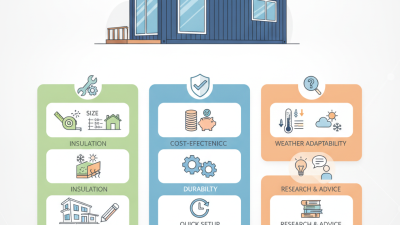
What is Container House Ready for Global Buyers?
The concept of "Container House Ready" is gaining momentum among global buyers. As urban populations rise, traditional housing struggles to keep pace. Reports indicate that container homes are becoming a viable alternative due to their affordability and sustainability. The global modular construction market is projected to grow significantly, reaching $157 billion by 2024.
Experts like Dr. Emily Carter, a leader in modular construction research, emphasize the potential of container houses. She states, "Container homes are not just a trend; they represent a shift towards smarter living solutions." This innovative approach offers flexibility and reduced construction time, addressing urgent housing needs in various regions.
Nevertheless, challenges remain. Quality standards vary widely, and buyers must navigate regulatory hurdles. Not all designs are equally practical or aesthetically pleasing. As the market matures, a focus on quality and consumer education is essential. Potential buyers should critically assess options to ensure their "Container House Ready" investment truly meets their needs.

What Defines a Container House for International Markets?
Container houses are gaining traction in international markets due to their unique qualities. A report from Grand View Research indicates that the global modular construction market is expected to reach $157.4 billion by 2028. This growth reflects a rising demand for sustainable and innovative living solutions. Container houses are particularly appealing because they utilize repurposed materials, reducing waste and carbon footprints.
Design matters significantly in appealing to global buyers. A well-designed container house can offer functionality and aesthetic charm. Features like insulation and customizable layouts enhance comfort and livability. However, achieving a balance between affordability and quality can be challenging. Some buyers may find that cheaper options compromise durability or design appeal, leading to dissatisfaction.
Furthermore, local regulations and building codes impact the feasibility of container homes. Some areas may impose restrictions, affecting not only construction but also resale value. This variability creates a need for thorough research and professional guidance. A nuanced understanding of local market trends is crucial for potential buyers. Despite some setbacks, the container house market demonstrates potential for future growth in response to evolving consumer preferences.
Container House Demand by Region (2023)
Key Features and Specifications of Container Houses Globally
Container houses are emerging as an innovative solution for global housing needs. They offer unique advantages like affordability and quick assembly. According to a recent report from the International Organization for Standardization (ISO), the construction industry is increasingly exploring modular and container-based structures. This shift represents a potential cost reduction of up to 30% compared to traditional building methods.
Key specifications of container houses include customizable interiors and energy-efficient designs. Most units are constructed from high-strength steel, ensuring durability and security. Furthermore, many are equipped with thermal insulation systems, allowing for energy savings. Data from the Global Modular Construction report suggests that container homes can result in a 50% reduction in energy consumption compared to conventional homes. However, their adoption is not without challenges. Potential owners must consider local building codes and zoning regulations, which can vary significantly.
Design flexibility is another hallmark of container houses. Buyers can choose between single or multi-container configurations. While many opt for open-plan layouts, privacy can become a concern. A study from the Journal of Sustainable Architecture notes that some inhabitants struggle with space optimization. It's essential for future container house developers to address these design concerns while maintaining sustainability objectives.
Sustainability and Cost Efficiency in Container House Construction
Container houses are gaining attention for their sustainability and cost efficiency. These innovative structures utilize repurposed shipping containers, making them environmentally friendly. According to a report by the World Economic Forum, the construction industry contributes nearly 39% of global carbon emissions. Container houses can help reduce this percentage significantly.
Building with containers requires less energy and fewer traditional materials. It can reduce construction waste by up to 75%, according to the Environmental Protection Agency. This offers a compelling reason for global buyers. The initial investment may be higher, but long-term savings on energy and maintenance are noteworthy.
Tip: Consider the local climate when designing your container house. Proper insulation can further boost energy efficiency.
Some challenges still exist. Not all areas have regulations supporting container structures. Potential buyers need to research zoning laws and building codes. Adapting the interior to meet local building codes may sometimes be complex.
Tip: Connect with local architects experienced in container design. Their expertise can save time and trouble.
Ultimately, the rise of container houses represents a shift toward sustainable living. Embracing this trend not only benefits individual buyers but also promotes a more environmentally conscious future.
Market Trends: Growth of Container House Adoption Worldwide
Container houses are gaining popularity among global buyers. Their adaptability and eco-friendliness appeal to many. Using repurposed shipping containers, builders create unique homes. These structures are often cost-effective, simplifying the construction process. The trend is especially notable in urban areas struggling with space.
Market trends show a steady growth in container house adoption. People seek sustainable living solutions. The modular nature allows for easy customization. These homes can fit into various environments. However, the challenge lies in local regulations and zoning laws. Some buyers face obstacles in securing permits. Understanding these regulations is crucial for success.
Quality is vital when constructing a container house. Not all containers are suited for living spaces. Buyers should consider insulation and ventilation. It's essential to address these issues. While container homes provide a solution to housing shortages, they are not without flaws. More research is needed to explore their long-term durability. As interest grows, the challenge remains to balance innovation with practicality.
Regulatory Challenges Faced by Container House Buyers Globally
Container houses are gaining popularity worldwide. However, buyers face significant regulatory challenges. Local building codes and zoning laws often restrict where these structures can be placed. Buyers must navigate complex regulations that vary greatly by region. This creates uncertainty for potential owners.
During your research, check local regulations thoroughly. Websites of local authorities can provide essential information. Understanding these requirements helps avoid costly mistakes. Take note of land use restrictions and permit requirements.
Another challenge buyers may face is financing. Many traditional lenders are unfamiliar with container homes. They often view these properties as unconventional, which may complicate loan approvals. Explore alternative financing options, such as credit unions or specialized lenders.
Be prepared for unexpected delays during the approval process. Construction permits can take longer than anticipated. Set realistic timelines when planning your project. Patience is key in this ever-evolving market.