Building Faster | Smarter | Greener

Leave Your Message

Who Are the Top Prefab House Manufacturers in China?

Prefab Houses are changing how buyers compare speed, cost, and construction quality. China’s manufacturers range from large modular-building groups to specialist producers of steel-frame cabins and container-based units. Their product photos may look similar. Factory capacity, material specifications, and delivery support often tell a different story.

The McKinsey Global Institute’s 2019 report, “Modular construction: From projects to products,” says modular methods could deliver projects 20 to 50 percent faster and reduce costs by up to 20 percent. These are potential gains, not guarantees for every project. Jan Mischke, a McKinsey Global Institute partner whose research examines construction productivity, has argued that modular construction can help improve industry productivity. That perspective is useful, but it does not certify any individual supplier. Evidence matters.

This guide examines leading Chinese manufacturers through practical buyer questions: What systems do they build? Can they show completed projects? How clearly do they explain insulation, fire performance, quality controls, and installation requirements? A reliable comparison should distinguish factory-made modules from panelized systems, since the two can involve different transport and site processes. Buyers should also check what is included in quoted prices. Freight, foundations, and onsite assembly can change the final cost. I would not treat a polished website as proof of performance; that is an easy mistake to make. The shortlist ahead is intended as a starting point, not a universal ranking. Independent verification remains essential.
Who Are the Top Prefab House Manufacturers in China?

Understanding China’s Prefabricated Housing Industry

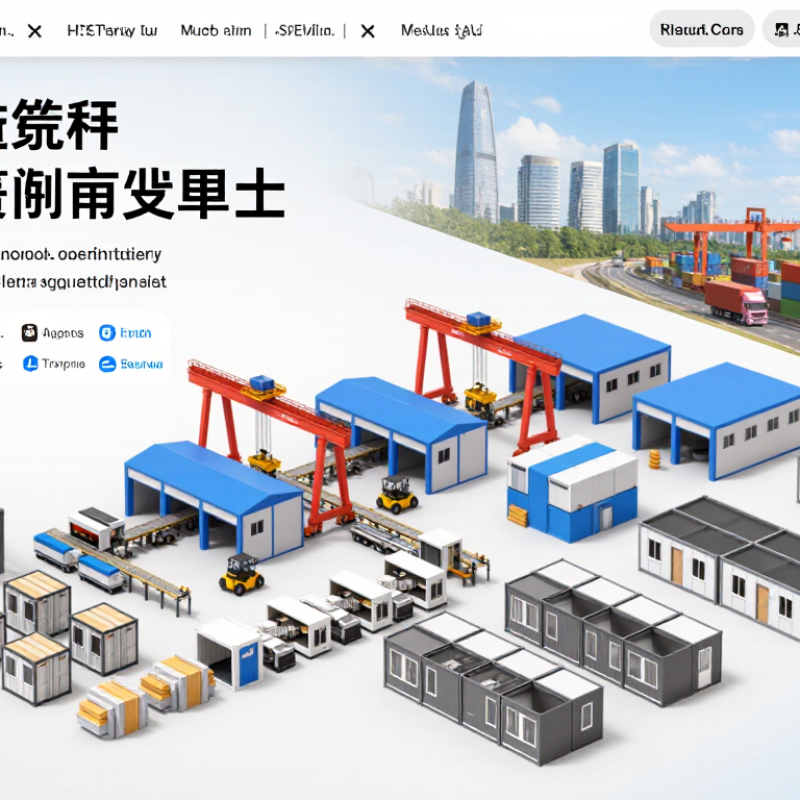
China’s prefabricated housing industry brings design, factory production, and on-site assembly into one coordinated process. Manufacturers may produce steel-frame modules, panelized walls, or complete room units. These options differ in transport needs, installation speed, and design flexibility. “Prefab” is not one construction method.

A reliable assessment starts with the building, not a sales promise. Ask how the structure handles local wind, rain, temperature changes, and intended use. Review material specifications, factory quality checks, and project records. A visit can reveal practical details: protected wiring, even welds, sealed window joints, and clear labeling on components. Small things matter.

Buyers should also clarify what the quoted scope includes. Foundations, plumbing connections, insulation, shipping, and local installation may be priced separately. Requirements vary by destination, so confirm that drawings and documentation suit the project’s local approval process. Faster assembly is possible. It is not automatic. Even a well-built module can face delays if site access is narrow or utilities are unprepared. That distinction is easy to miss. The industry is capable and evolving, but comparing manufacturers takes careful questions, not just a low price or attractive renderings.
Criteria for Identifying Leading Prefab House Manufacturers

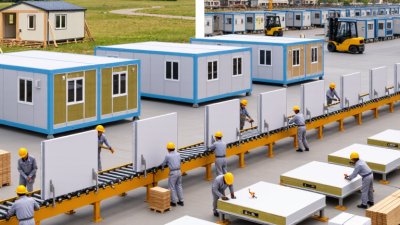
Leading prefab house manufacturers should be judged by evidence, not showroom photos. Ask for factory audit records, engineering drawings, material certificates, and completed-project references. A reliable supplier can show how steel or timber grades are checked, how wall joints are sealed, and how modules are protected during transport. Small details matter: a poorly packed corner can arrive dented, while an untested joint may leak after heavy rain.

Production capacity is useful only when quality stays consistent. Review inspection records for dimensional tolerances, welding, insulation, and electrical or plumbing integration.

The McKinsey Global Institute’s 2019 report on modular construction estimates that suitable projects may be delivered 20–50% faster, with potential cost savings of up to 20%. These are industry estimates, not guarantees. Compare the proposed schedule with factory output, shipping routes, installation crews, and local weather conditions.

Check whether the manufacturer provides clear after-sales support, spare parts, and documented warranty terms. Request references for projects with similar climates and building uses, then ask how defects were handled. No scorecard is perfect. A polished factory visit cannot reveal every site problem, and buyers may overlook this. Compare at least three detailed quotations, including transport, foundations, installation, and exclusions, before deciding.

Major Chinese Prefab House Manufacturers and Their Specialties

China’s prefab-house suppliers are better compared by production specialty than by a single “top” ranking. The Ministry of Housing and Urban-Rural Development reported that prefabricated buildings covered about 630 million square metres in 2022, or 26.2% of newly constructed building area. That scale supports several factory models, not one standard product.

Modular-unit manufacturers focus on complete room-sized units, often with wiring, plumbing, insulation and finishes installed before delivery. Their strength is quick assembly for worker housing, clinics or remote accommodation.

Light-gauge steel specialists make framed panels and compact cabins that can be easier to transport on narrow roads.

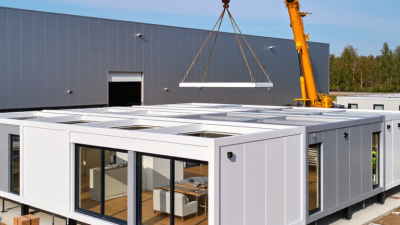
Precast-concrete producers suit larger, durable structures, but lifting access and foundations need careful planning. Details matter.

McKinsey’s 2019 report on modular construction estimates that suitable projects may be completed 20–50% faster. That is a global estimate, not a promise for every Chinese project. Buyers should compare fire and thermal test records, connection drawings, coating specifications, factory checks and installation support. A neat showroom can hide weak joints. Check twice. Transport distance, crane time and custom changes can erase savings, so request a bill of materials and inspect a sample.

Comparing Manufacturers’ Quality, Capacity, and Certifications

Who Are the Top Prefab House Manufacturers in China?

Comparing manufacturers means looking beyond showroom photos. Inspect welds, panel joints, roof edges, and sealant on a finished unit. Ask for documented quality checks at each production stage, not only a final inspection.

McKinsey’s 2019 report, Modular construction: From projects to products, says modular methods can reduce project timelines by 20–50% under suitable conditions. That potential depends on design coordination and factory control; it is not a guaranteed delivery time.

Numbers need context. Compare a factory’s stated annual capacity with its current orders, production shifts, and recent delivery records.

Certifications help, but scope matters. Request valid ISO 9001 documentation and verify that its registered entity and sites match the factory. For export projects, check whether relevant product testing and destination-market requirements apply; a certificate alone does not prove that every house component complies.

Ask for structural calculations, fire-test reports, and material traceability where appropriate. A manufacturer should be able to show sample records, not just a certificate wall.

One weakness in many comparisons is that buyers treat capacity as a quality measure. It isn’t.

Tips:

Ask to inspect a recent production batch, including concealed framing and moisture barriers. Compare lead times, defect-handling procedures, and certification scopes in writing. If a claim sounds unusually precise, request the evidence behind it.

Choosing a Chinese Prefab House Manufacturer for Your Project

Choosing a Chinese prefab house manufacturer starts with the project brief, not the catalogue. Define the building’s climate, occupancy, lifespan, and target delivery date. Then ask for drawings, a bill of materials, and documented quality checks. A factory visit can reveal whether steel sections, insulation, and window seals match the specifications. Useful evidence includes recent project references and test reports for the exact wall or roof assembly. A glossy sample room is not enough.

Production speed matters, but it needs context. McKinsey’s 2019 report, Modular construction: From projects to products, found modular methods can shorten project schedules by 20–50% in suitable cases. That is a benchmark, not a promise for every order. Confirm how the supplier handles design revisions, factory inspections, packing, and shipping delays. Ask for a written schedule with approval dates and inspection points. Small details count.

Energy performance deserves equal attention. The UN Environment Programme’s 2023 Global Status Report for Buildings and Construction attributes 37% of global energy- and process-related CO₂ emissions to buildings and construction. For a prefab home, request insulation values, airtightness details, and window specifications—not just claims of “energy saving.” Compare the delivered scope with local project requirements through your designer or engineer. One useful rule, though imperfect: if a performance claim cannot be tied to a test or drawing, treat it as unverified. A rushed decision can cost more later.

Who Are the Top Prefab House Manufacturers in China? — Choosing a Chinese Prefab House Manufacturer for Your Project

Evaluation Area What to Compare Evidence to Request Why It Matters Project-Specific Check
Product and system fit Compare the proposed structural system, wall and roof assemblies, finishes, and whether the offer is panelized, modular, or a combination. Drawings, specifications, material schedules, and a clearly defined scope of supply. Prefab systems differ in transport requirements, site work, assembly sequence, and the amount of work completed in the factory. Confirm that the proposed system suits the intended use, site conditions, local regulations, and available installation skills.
Engineering and local compliance Check how structural loads, foundations, wind, snow, seismic conditions, fire safety, and energy requirements will be addressed. Project-specific calculations and drawings prepared or reviewed by suitably qualified professionals; a compliance schedule for the destination country. Building requirements depend on location, occupancy, building type, and the applicable codes. A factory product description alone does not establish project compliance. Have the design checked against the requirements of the local authority and the project’s appointed engineer before production.
Quality management Review factory inspection procedures, material traceability, production records, and the process for correcting non-conformities. Quality procedures, inspection and test plans, sample inspection records, and current certificates that can be independently verified. ISO 9001 specifies requirements for a quality management system; certification by itself does not certify that a particular building meets local building codes. Verify the certificate’s scope, issuing body, validity, and whether it covers the relevant manufacturing site and activities.
Materials and performance Compare specified grades, thicknesses, coatings, insulation, glazing, corrosion protection, and fire-performance requirements. Technical data sheets, test reports, material certificates, and clearly stated product specifications. Performance depends on the complete assembly and installation, not on a single material label or advertised rating. Check that test methods and reported ratings are accepted for the destination market and match the specified assembly.
Factory capability Assess whether the manufacturer has the equipment, workforce, and production controls needed for the project’s design and finish level. Recent production references for comparable systems, factory inspection access, and a documented production schedule. A supplier’s capacity and experience should be relevant to the requested product, project scale, and delivery plan. Confirm the production site, planned inspection points, approved samples, and the procedure for handling design changes.
Export and logistics Clarify packing method, shipping dimensions, loading plan, shipping documents, delivery terms, and responsibility for unloading. Packing list, container or transport plan, draft shipping documents, and a written allocation of freight, insurance, and customs responsibilities. Oversized modules may face different transport constraints from flat-packed panels; customs and import requirements depend on the destination. Ask a freight forwarder to review the proposed packing and route, and confirm import duties, taxes, and clearance requirements locally.
Installation and after-sales support Compare installation manuals, technical assistance, spare-part arrangements, warranty terms, and defect-resolution procedures. Installation sequence, interface details, warranty document, service response process, and a list of exclusions. Factory production is only one part of delivery; site preparation, assembly, connections, and commissioning also affect project outcomes. Identify who is responsible for foundations, utilities, lifting equipment, assembly, inspections, and final handover.
Commercial transparency Compare quotation scope, exclusions, payment milestones, lead time, change-order rules, and delivery assumptions. Itemized quotation, contract specification, milestone schedule, and written terms for delays, changes, and acceptance. Comparing quotations on the same scope helps reveal differences in included materials, services, and delivery responsibilities. Use one common specification and request each shortlisted supplier to identify every assumption and exclusion.

Note: This is a supplier-selection framework, not a ranked list. Verify certificates, test reports, references, and project compliance independently; requirements vary by destination and building use.